
Foraging in Autumn in the UK
What to Look For on Hampshire Foraging Walks

Autumn is one of my favourite times of year to forage. I always get very excited about welcoming the season in all its glory: the hedgerows heavy with berries, the woodland floors rich with fallen leaves under which mushrooms hide, the cool morning air, and the feeling of nature is offering up one final feast before winter draws in. It is also the most popular season for my Hampshire foraging walks with walkers intrigued and excited to about wild mushrooms!
Spring is full of fresh greens and delicate blooms, summer brings herbs and flowers, but autumn has depth. It is abundant with what it has to offer and to prepare us for the season to come. The season of mushrooms, fruits rich in vitamin C, nuts, roots, seeds and plants like nettles coming back for a second flush of freshness.
Foraging in autumn is not just about finding wild food - it is about learning to slow down and notice the landscape around us. A walk through a field edge, woodland path or hedgerow suddenly becomes full of possibility to fill your winter larder. You begin to see how the seasons move, how plants change, what is coming into fruit, what is fading away, and what can be used in the kitchen.
What Can You Forage in Autumn in the UK?
Autumn is one of the most exciting seasons for wild food in the UK. What you find will depend on the weather, location and timing, but across much of the British countryside, there are some wonderful seasonal ingredients to look out for.

Blackberries
Blackberries are probably one of the most familiar autumn foraged foods - I will never stop campaigning against buying 200g of blackberries for half the mortgage of your house when the hedgerows are FULL of them! They are easy to recognise, and incredibly useful in the kitchen. I love them in crumbles, cakes, syrups, vinegars, jams, and sauces. This year I experimented with fermented blackberry hot sauce and let me just say WOW because all the bottles I made have already disappeared!
They are also a lovely gateway into foraging for beginners because many of us already have childhood memories of picking them from hedgerows. There is something very nostalgic about returning to such a simple seasonal ritual.

Elderberries
Elderberries follow the elderflower season and arrive as deep purple-black clusters in late summer and autumn. They need to be cooked before eating, but once prepared properly, they are brilliant for syrups, cordials, vinegars, jellies and winter kitchen remedies.
I always think of elderberries as one of those ingredients that prepare you for the colder months. A bottle of elderberry syrup in the fridge keeps the cold and flu away with its powerful mix of vitamins.
Rosehips
Rosehips are beautiful red and orange jewels in the hedgerow, usually appearing from late summer into autumn. They are rich in flavour and vitamins, and often used for syrups, teas, jellies and sauces. In fact you can often find rosehip tea in holistic food stores. They do need careful preparation because of the irritating hairs inside, but they are absolutely worth learning about coming into winter.

Crab Apples/Wild Apples
Crab apples are another wonderful autumn find. They are sharp, tannic and not always pleasant eaten raw, but cooked down they become delicious. Fantastic for jellies, chutneys, sauces and adding natural pectin to preserves.
You can also find plenty of delicious wild apples to eat raw - apples have been cross polinating in the wild with cultivated trees from gardens and orchards, and we have some incredible varieties growing in the UK. I personally have a wild apple tree which is hidden in
the woods and I don't tell anyone about because the apples are big and juicy!
Sloes
Sloes are the small, dark fruit of the blackthorn and are famously used to make sloe gin. They are mouth-puckeringly sharp raw, but transformed with time, sugar and alcohol into a countryside tradition enjoyed at Christmas, after a shoot day, or at elevens.
Even if you do not drink, you can make slow syrup to add to sparkling water or lemonade,
and make jams and chutneys from sloe.

Hawthorn Berries
Hawthorn berries, sometimes called haws, are another common autumn hedgerow ingredient. They have been used traditionally in jellies, fruit leathers, sauces, teas and ketchup. I have made hawthorn ketchup before and it was delicious - like a mix between ketchup and BBQ sauce when you use flavours like cayenne and paprika. The flavour can be quite subtle, but they are a fascinating plant to learn about because hawthorn is so deeply woven into British folklore and countryside history.

Hazelnuts and Sweet Chestnuts
Autumn is also the season of nuts, although you often have to be quick because wildlife usually gets there first. Hazelnuts and sweet chestnuts are both wonderful finds if you come across them at the right moment.
Sweet chestnuts are especially exciting. Roasted, they have that floury sweetness that is remiscent . of walking around Christmas markets. Just make sure you know the difference
between edible sweet chestnuts and horse chestnuts, which are not edible!
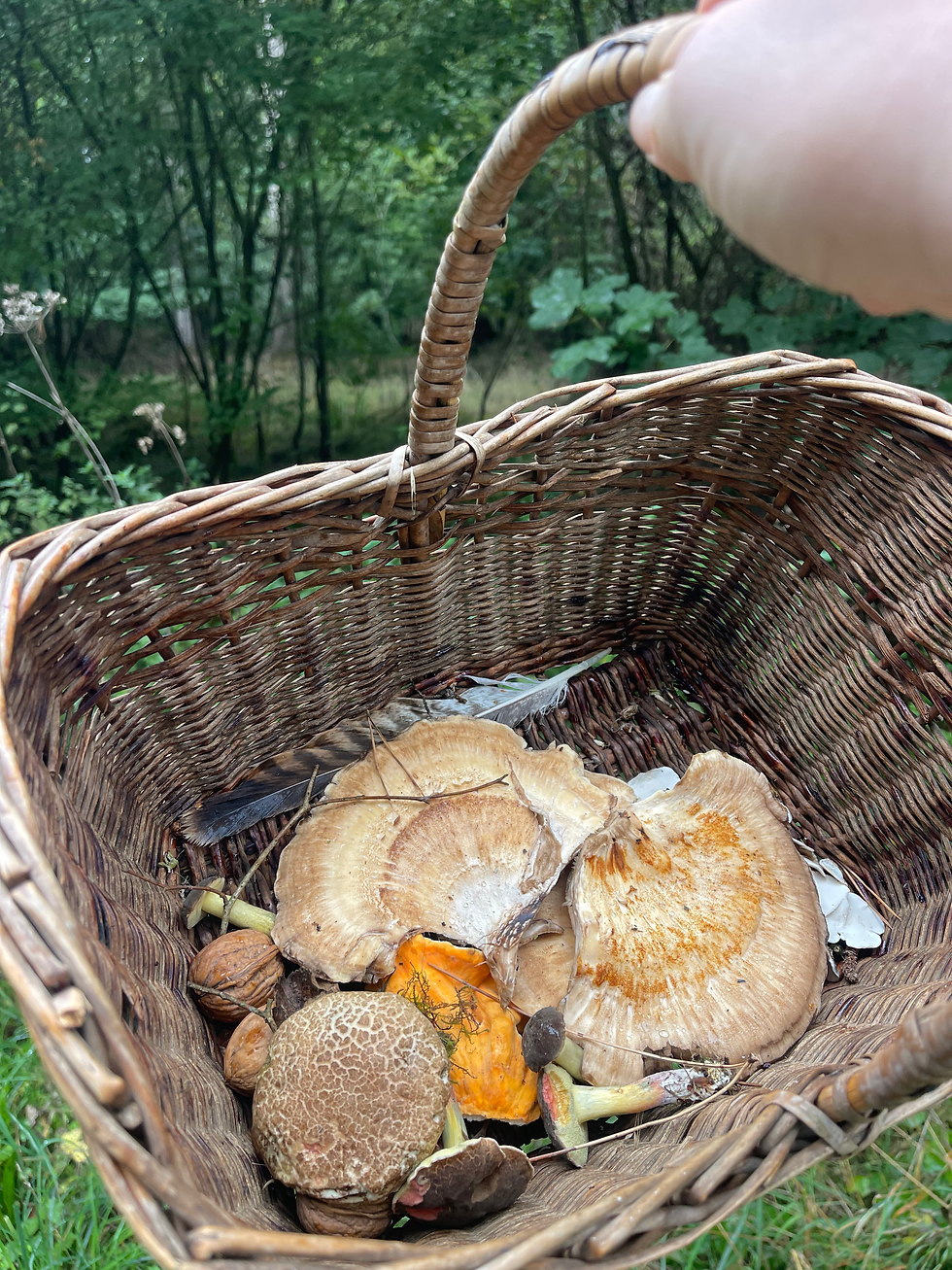
Mushrooms
Mushrooms are one of the most exciting parts of autumn foraging, but also the area where caution really matters. The UK has some incredible edible fungi, from puffballs to field mushrooms, boletes and chanterelles, but there are also dangerous and deadly species.
This is why I always recommend learning mushrooms in person with someone experienced, especially if you are a beginner. Books and apps can be useful tools, but they should never replace careful identification and proper knowledge.
On my Hampshire foraging walks, we talk not only about what you can eat, but also what you must avoid. Confidence comes from knowing both.
Nettles, Seeds and Autumn Greens
Although many people associate nettles with spring, you may still find usable young growth later in the year, especially if plants have been cut back and regrown. Autumn can also bring
seeds, roots and late greens depending on where you are walking.

Autumn Is Such a Good Time to Learn Foraging
Foraging in autumn is fun and abundant, but it also teaches respect. There is plenty to find, but not everything is edible, and not everything should be picked. Learning how to identify wild food safely is only one part of the skill. Learning when to leave something behind is just as important.
For me, autumn foraging is about connection. It reminds us that food does not begin and end at the supermarket. It grows in hedgerows, woodland edges, fields, gardens and forgotten corners. It has seasons, stories, risks and rewards.
It is also a beautiful step towards becoming a little more self-sufficient. You do not need acres of land to begin. Sometimes it starts with learning what is already growing nearby, how to use it safely, and how to preserve it for later.
A jar of blackberry vinegar, a bottle of elderberry syrup, dried herbs, pickled wild garlic seeds, fruit leather, mushroom stock, or a batch of crab apple jelly can all become small acts of seasonal self-sufficiency.
Hampshire Foraging Walks
My Hampshire foraging walks are designed for beginners and anyone who wants to feel more confident identifying wild food safely. We explore the countryside, looking at seasonal plants, mushrooms and hedgerow ingredients, while talking about how to use them in everyday cooking.
The walks are not about rushing through the landscape with a basket and a checklist. They are about learning to notice. We talk about edible plants, poisonous lookalikes, folklore, traditional uses, responsible harvesting, and how to bring wild ingredients into your own kitchen.
I host walks across Hampshire and Wiltshire, including beautiful countryside around Stockbridge, the Test Valley, Salisbury Plain and the surrounding areas. Every walk changes with the season, which is part of what makes them so special.
Autumn walks are particularly magical. The colours shift, the light softens, the mushrooms appear, and the hedgerows seem to tell an entirely different story from summer.
A Note on Foraging Safely
Foraging is a wonderful skill, but it should be approached with care if you're new to it. Never eat anything unless you are completely confident in your identification, and be especially cautious with mushrooms. Avoid picking from polluted areas, roadsides or sprayed land, and always harvest responsibly so there is plenty left for wildlife and for the plant to keep thriving.
The more you learn, the more rewarding it becomes. Foraging is about building a relationship with nature.
Autumn in the UK is a beautiful season for wild food. From blackberries and elderberries to crab apples, rosehips, sloes, nuts and mushrooms, there is so much to discover if you know where to look.
But more than anything, autumn foraging teaches you to slow down and pay attention. It turns an ordinary walk into something richer. It helps you understand the seasons, the land, and the food growing all around us.
And that, for me, is why I love it so much.
If you would like to learn how to identify wild food safely, my Hampshire foraging walks are available to book through my website. Come and spend a morning outdoors, reconnect with nature, and discover the wild ingredients growing right on your doorstep!


